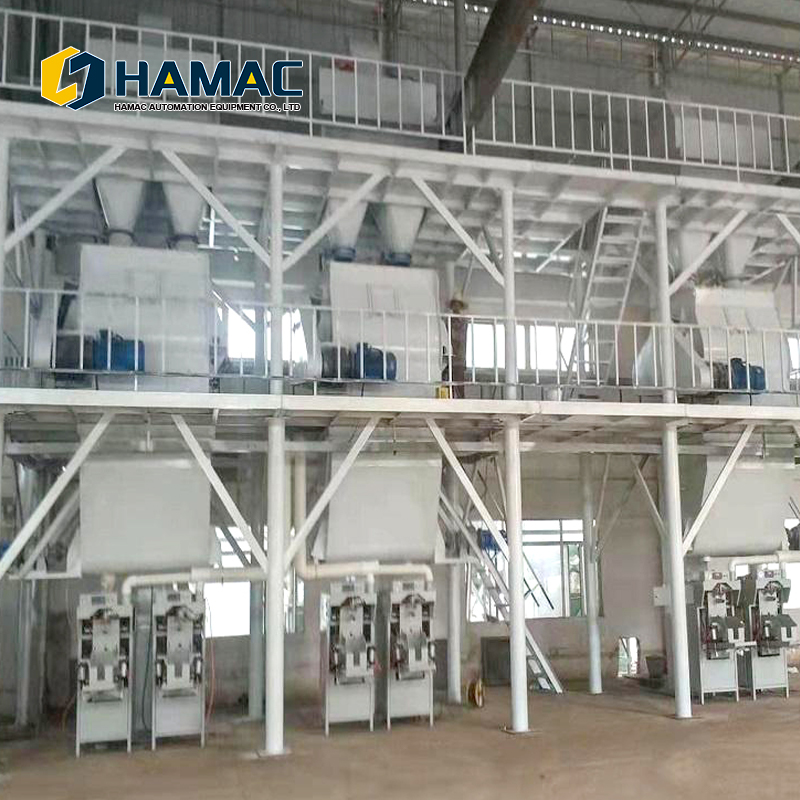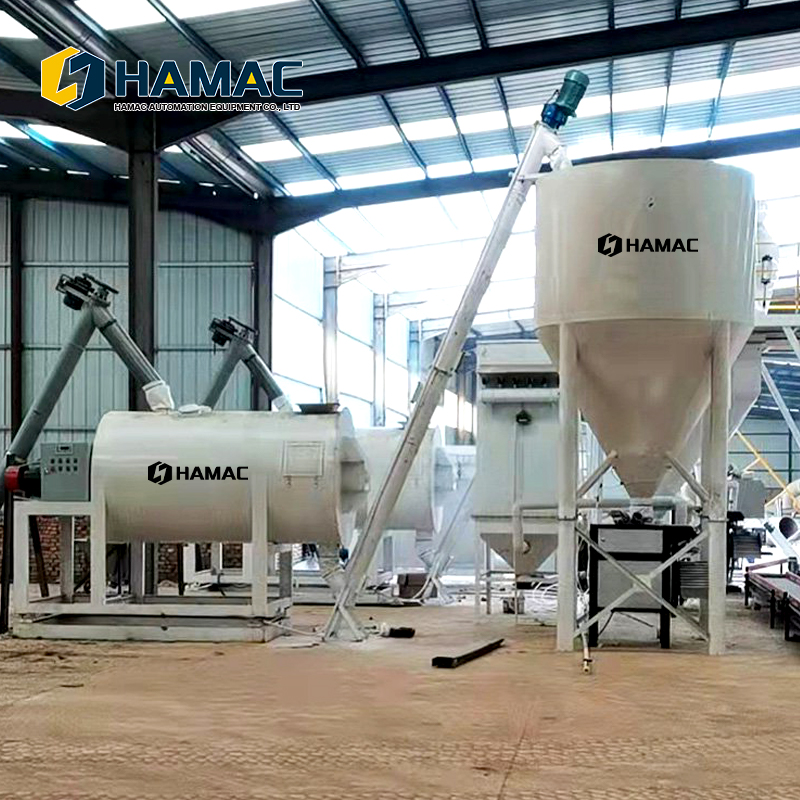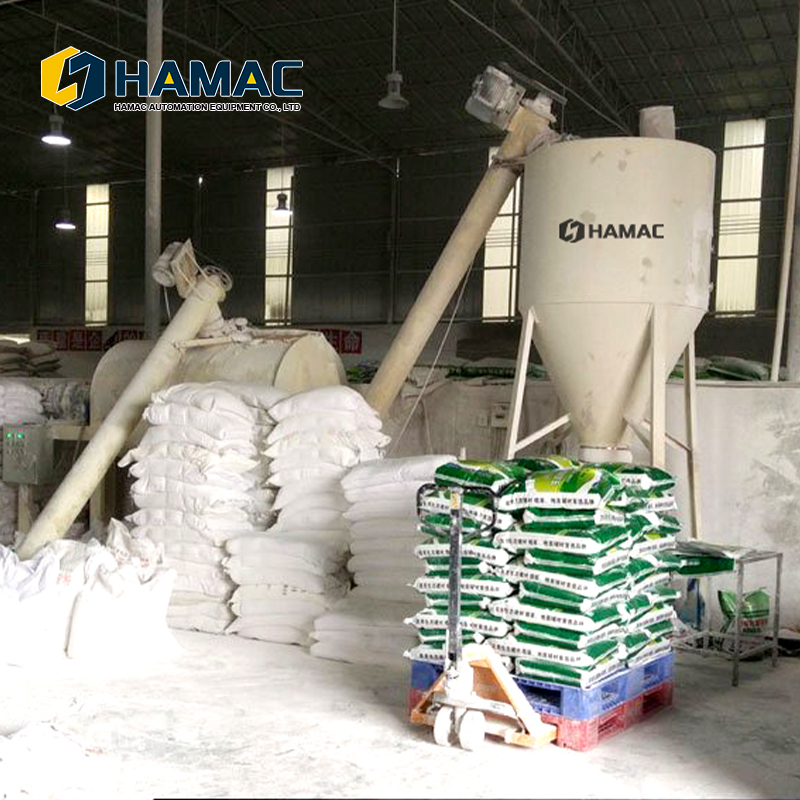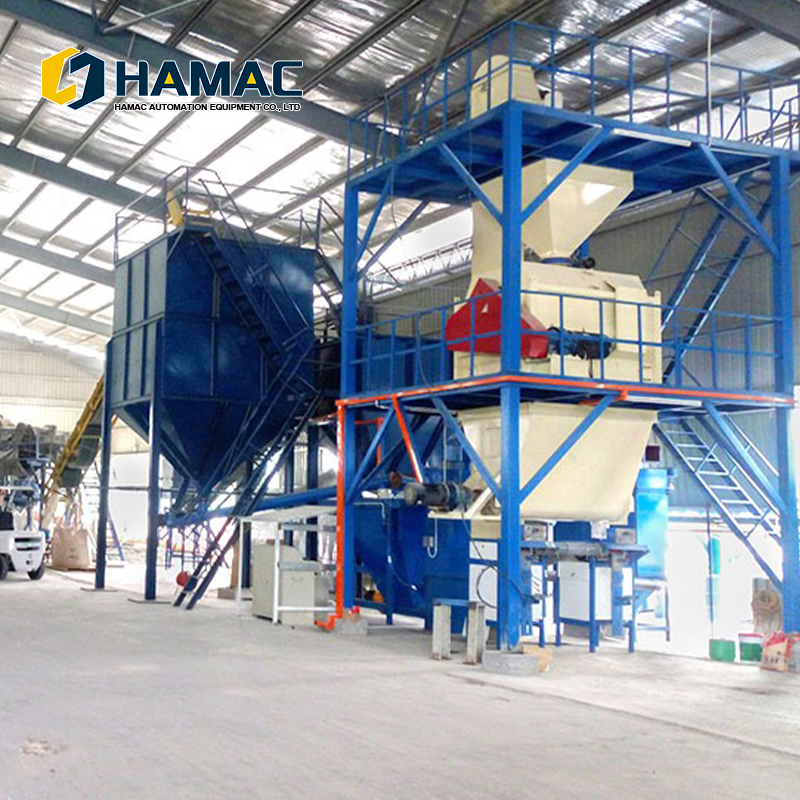


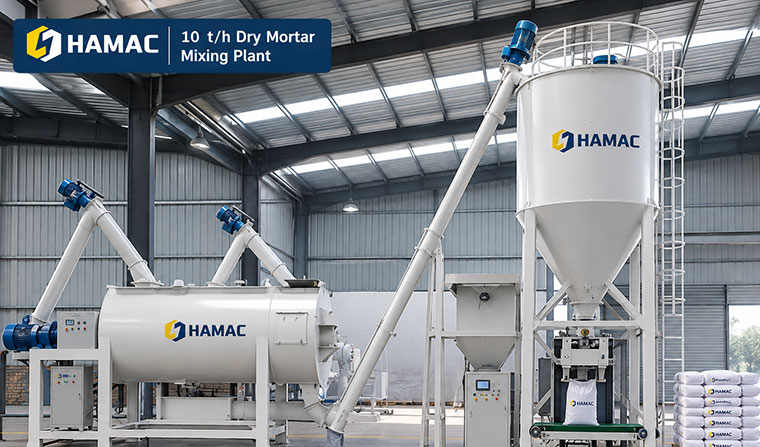


HAMAC 8–20 T/H Mini Compact Dry Mix Production Line
The HAMAC 8–20 T/H mini compact dry mix production line is a practical and cost-effective solution for small and medium-sized building material manufacturers, start-up investors, regional distributors and contractors planning to produce dry mix products locally.
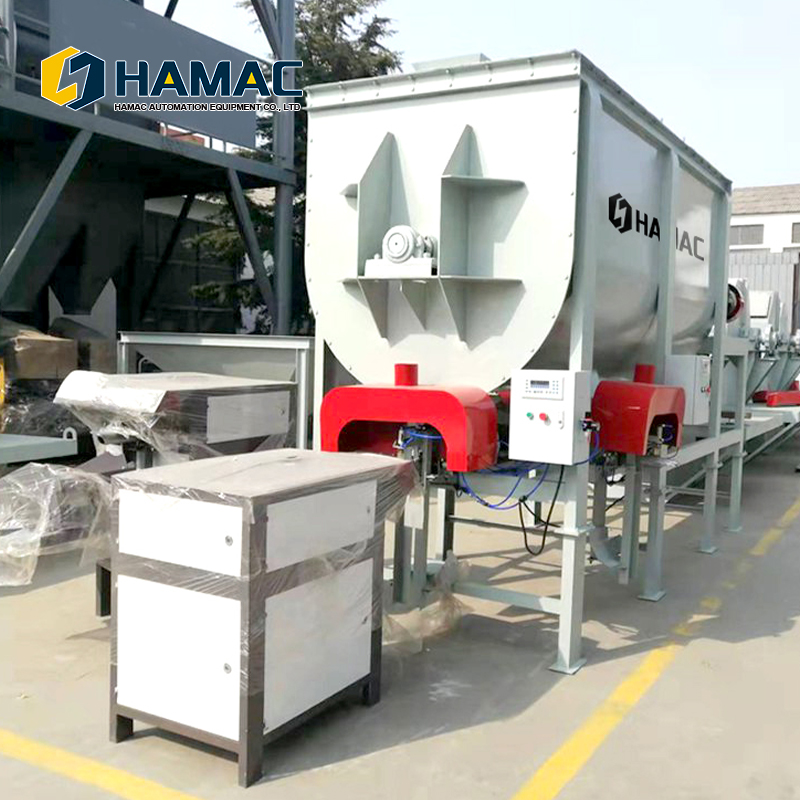
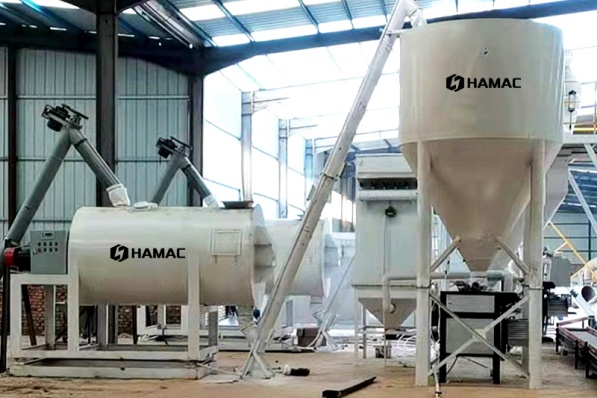
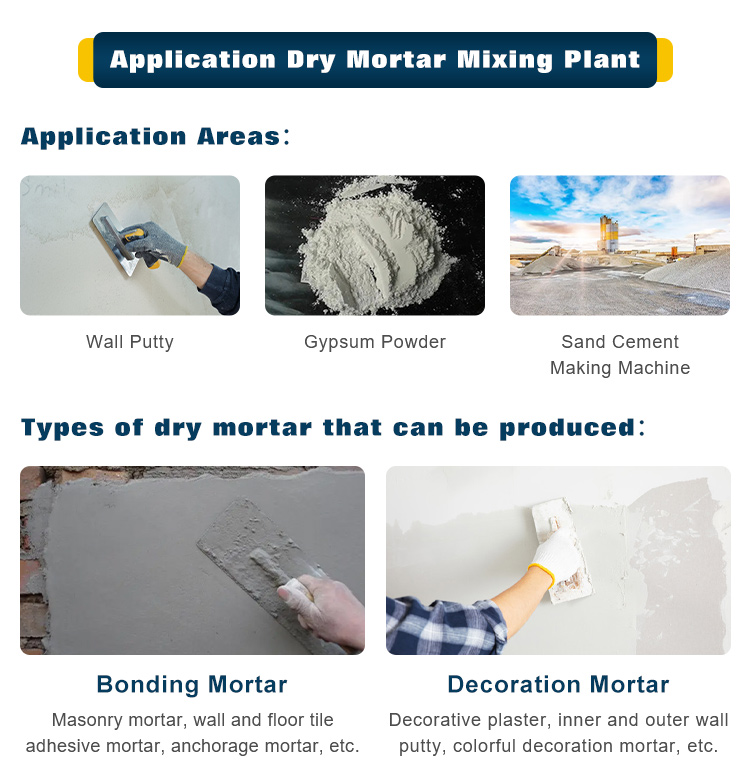
This small dry mortar plant is designed for the production of wall putty, tile adhesive, gypsum mortar, cement plaster, masonry mortar, thermal insulation mortar and other dry powder building materials. With a compact stepped layout, high-efficiency mixer, dust collection and valve bag packing system, it offers a balanced solution for customers who need stable production while keeping initial investment and factory space requirements under control.
Plant at a Glance
- Capacity: 8–20 T/H
- Layout: Compact stepped structure
- Suitable for: Small and medium dry mortar projects
- Mixer: Twin-shaft gravity-free mixer
- Packaging: Valve bag filling machine
- Control: Manual or semi-automatic options
Compact Dry Mortar Plant for Flexible Local Production
The 8–20 T/H dry mortar mixing plant is designed for customers who need a reliable dry mix mortar production solution but do not require a large tower-type or fully automatic plant at the initial stage. Its compact structure makes it suitable for sites with limited factory height, limited available land or phased investment plans.
Depending on the selected configuration, the plant can operate with manual raw material feeding, assisted weighing hoppers or semi-automatic dosing functions. Customers can choose the most suitable configuration according to product formula, output target, local labor cost, available workshop conditions and budget.
Core Features of the Mini Compact Dry Mix Production Line
1. Flexible 8–20 T/H Output
The mini dry mortar plant can be configured for different output levels between 8 and 20 tons per hour. The actual capacity depends on the mixer size, product formula, raw material flow, feeding method and packing arrangement.
2. Compact Stepped Layout
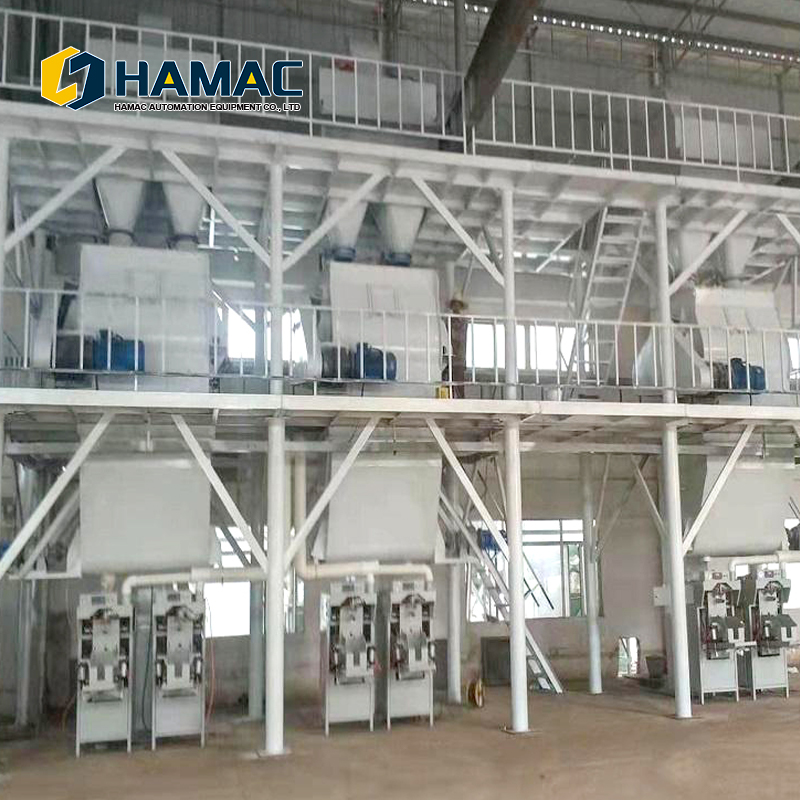
The compact stepped arrangement reduces the required installation area and can be suitable for workshops with limited building height. A typical compact unit can be designed at approximately 6 meters in height, subject to final equipment selection and site layout.
3. Manual or Semi-Automatic Dosing
Customers can choose a basic manual feeding configuration or add weighing hoppers and assisted dosing functions for improved formula control. This makes the line suitable for different investment levels and production management requirements.
4. Simple and Reliable Control
The basic version uses a practical electrical control cabinet for straightforward operation. Optional weighing controls, interlocks and semi-automatic functions can be added when higher process control is required.
5. High-Efficiency Mixing
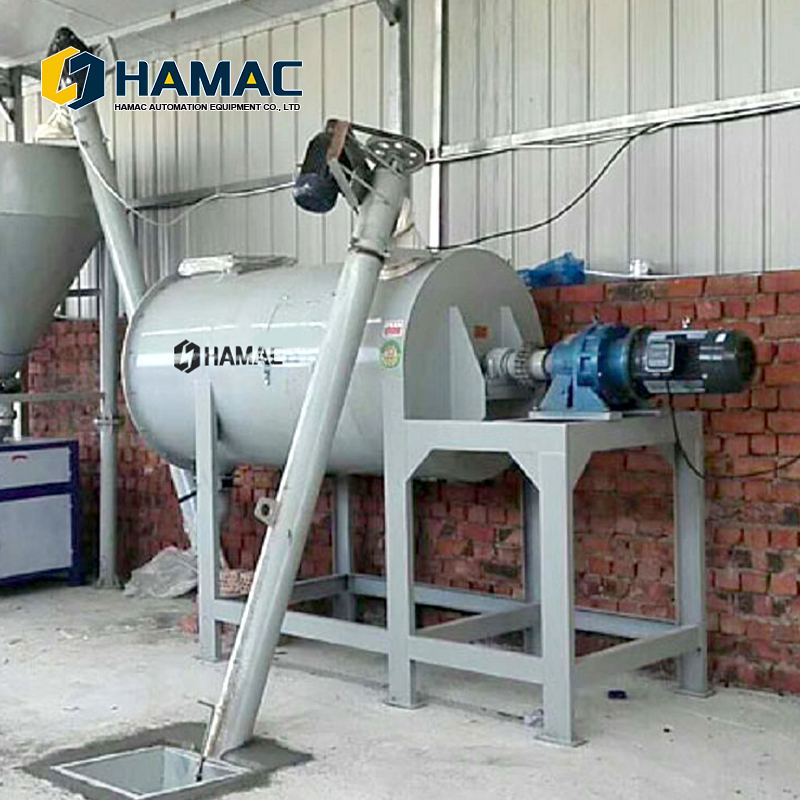
The line can be equipped with a twin-shaft gravity-free mixer to blend dry sand, cement, gypsum, fillers and additives. The mixer is selected according to your product type, batch volume and required mixing performance.
6. Dust Collection System
A pulse-jet dust collector can be installed at the feeding, mixing and packing areas to help control airborne dust and maintain a cleaner working environment.
7. Flexible Valve Bag Packing
The valve bag filling machine can be selected according to product characteristics, bag size and target packing speed. Air-assisted and impeller-type filling methods can be evaluated for different dry mortar products.
8. Low Initial Project Complexity
Compared with large automatic dry mortar factories, this compact line requires fewer silos, less steel structure and a simpler installation process, making it suitable for phased investment and market-entry projects.
Main Equipment Configuration
A typical small dry mortar production line includes the following equipment. The final configuration may change depending on whether you produce wall putty, tile adhesive, plaster mortar, gypsum mortar or ordinary masonry mortar.
| Equipment | Main Function | Configuration Option |
|---|---|---|
| Raw Material Hopper | Receives manually weighed dry sand, cement, gypsum, fillers and other raw materials | Manual feeding or upgraded weighing hopper |
| Bucket Elevator | Lifts raw materials from the feeding point to the mixer inlet | Selected according to required capacity and lifting height |
| Twin-Shaft Gravity-Free Mixer | Mixes dry sand, powders and additives into a uniform dry mix product | Mixer model selected according to capacity and product formula |
| Buffer Hopper | Temporarily stores mixed mortar before packing | Can include level sensor and flow-assistance device |
| Valve Bag Filling Machine | Fills dry mortar into valve bags for sales and distribution | Air-assisted or impeller type; bag size customized |
| Pulse-Jet Dust Collector | Collects dust from feeding, mixing and packing areas | Filter area and fan capacity selected according to the process |
| Air Compressor | Supplies compressed air for dust collection and pneumatic components | Configured according to pneumatic equipment demand |
| Electrical Control Cabinet | Controls feeding, elevating, mixing, discharge and packing operations | Manual, relay control or semi-automatic control options |
Working Process of the 8–20 T/H Dry Mortar Mixing Plant
The operating process is simple and suitable for small-scale commercial dry mortar production. Raw materials are prepared according to the required formula, fed into the system, mixed and packed into finished bags.
- Raw Material Preparation: Dry sand, cement, gypsum, calcium carbonate, additives and other materials are prepared and weighed according to the selected formula.
- Manual or Assisted Feeding: Materials are loaded into the feeding hopper manually or through an optional dosing system.
- Vertical Lifting: The bucket elevator lifts the materials to the mixer inlet.
- Mixing: The gravity-free mixer blends the raw materials until the required uniformity is achieved.
- Finished Product Buffering: Mixed dry mortar is discharged into the buffer hopper below the mixer.
- Valve Bag Packing: The finished product is filled into valve bags, typically according to local market requirements such as 20 kg, 25 kg or 40 kg bags.
Applications of the Mini Dry Mix Production Line
FAQ
Concrete, on the other hand, is a strong and durable material that hardens over time, achieving a stone-like consistency. Due to its high strength and versatility, concrete is widely used in load-bearing structures.
What are the main components of a gypsum mortar production line?
A gypsum mortar plant typically consists of:
- Storage system for raw materials
- Material conveying system for efficient transfer
- Automatic dosing system to ensure precise ingredient proportions
- High-efficiency gravity-free mixing system for uniform blending
- Finished product storage silos for ready-to-pack materials
- Automated packaging system for efficient bagging
- Robotic palletizing system for streamlined logistics
- Automatic control system for real-time process monitoring