

For many contractors, the traditional reliance on third-party ready-mix suppliers has introduced a layer of unpredictability that can derail even the most meticulously planned project schedules. Delivery delays, often caused by unpredictable traffic or difficult terrain, lead to significant labor downtime and jeopardize the structural integrity of the concrete itself due to premature setting. In response, a growing number of forward-thinking firms are reclaiming control over their supply chains by transitioning toward a model of total on-site production independence.
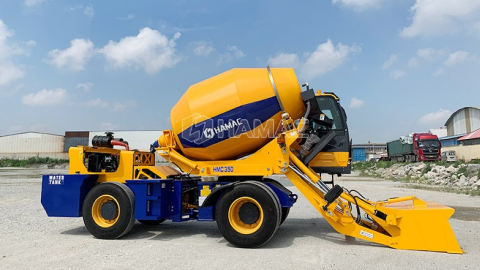
The centerpiece of this operational shift is the technological synergy between the HAMAC Self-loading Concrete Mixer and the integrated high-pressure concrete pump. This combination is effectively a mobile batching plant and delivery system rolled into one. Unlike traditional mixers that require a separate loading station, the HAMAC self-loading unit features a robust front-mounted bucket that allows it to intake aggregates and cement directly from stockpiles on the job site. This eliminates the need for a secondary loader and reduces the machine's overall footprint, a critical advantage in Peru’s often-congested urban job sites where space for heavy machinery is a luxury. The machine’s ability to weigh ingredients with precision via its onboard electronic system ensures that every batch meets the rigorous engineering standards required for modern infrastructure.
The operational workflow demonstrated in our latest Peruvian project highlights the seamless transition from raw material to finished pour. Once the self-loading mixer has reached the optimal consistency within its high-speed mixing drum, it maneuvers directly to the concrete pump’s hopper. This direct discharge eliminates the intermediate steps of using cranes, buckets, or wheelbarrows, which are both labor-intensive and prone to material waste. The pump then takes over, transporting the fresh concrete through a pipeline to the exact point of placement. This continuous cycle ensures that the pump is always fed with fresh concrete, maintaining a steady pressure that is vital for achieving a smooth, void-free finish on large-scale slabs and vertical structures alike.
Beyond the undeniable gains in speed and labor efficiency, the economic rationale for adopting this integrated solution is compelling. By producing concrete on-demand, contractors can drastically reduce material waste—pouring only what is needed for the day’s work without the risk of over-ordering from a supplier. There is also a significant qualitative benefit: the concrete is at its peak freshness when it enters the forms, ensuring maximum strength and durability. Furthermore, this independence grants teams the flexibility to operate on their own terms, allowing for early-morning or late-night pours to avoid heat or traffic without the logistical nightmare of coordinating with external vendors and paying premium after-hours surcharges.
As the construction landscape in Peru continues to evolve, HAMAC remains committed to empowering local contractors with the tools they need to overcome regional challenges. This integrated "Mixer-to-Pump" solution is more than just a combination of two machines; it represents a paradigm shift toward self-sufficiency and operational excellence. We believe that by providing equipment that is as durable as the structures it builds, we are helping our partners in Peru and throughout South America build a more resilient and efficient future. The era of waiting for the concrete truck is coming to an end, replaced by a new era of contractor-led production that is as dynamic as the projects it supports.
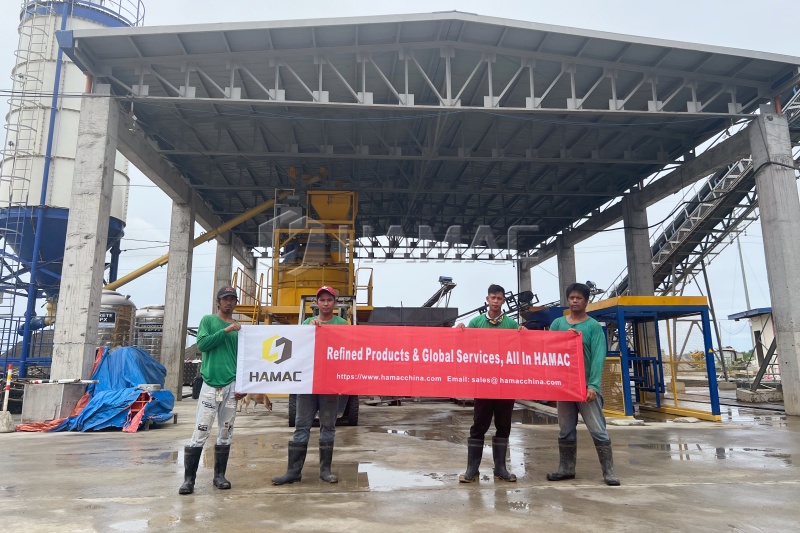
HAMAC Equipment at a Philippine Concrete Block Production Site
Case consultation
HAMAC Wishes You a Happy Mid-Autumn Festival
Case consultation