


DHBT15 vs DHBT30 concrete mixer pump: how to choose the right model?
Source: Hamac Machinery
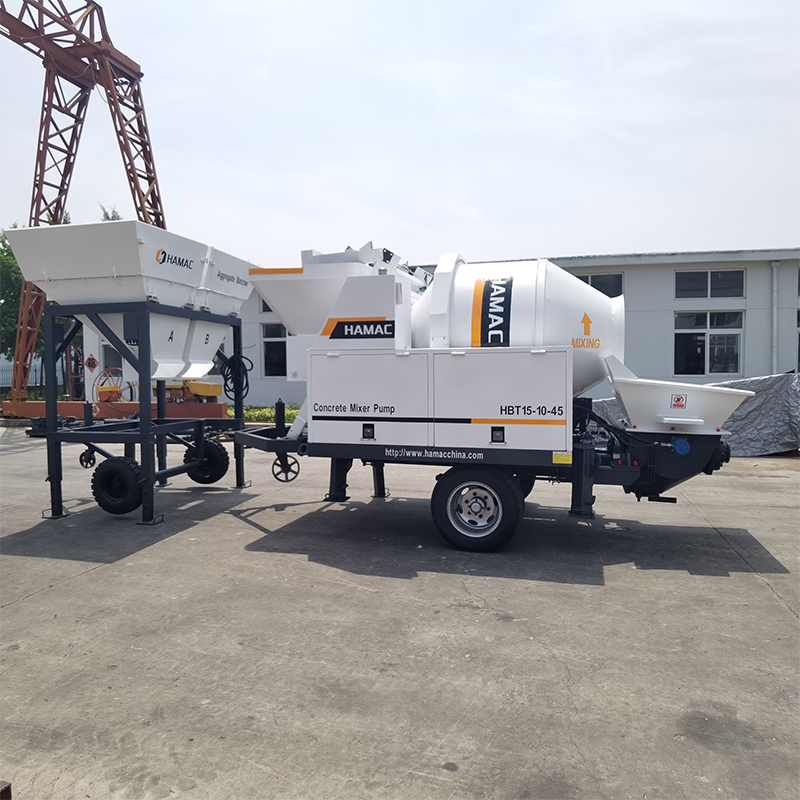
For many contractors, both DHBT15 and DHBT30 concrete mixer pumps look similar at first glance: they are diesel powered, combine a drum mixer and a trailer concrete pump on a compact frame, and are used to mix and pump concrete on the same machine. However, their capacity, pumping distance and ideal project types are not the same. Choosing the right model directly affects the efficiency of your concrete works and your total investment cost. This article summarizes the key differences between DHBT15 and DHBT30 and gives practical suggestions on how to select the most suitable model.
1. Basic concept: what do DHBT15 and DHBT30 mean?
The "15" and "30" in DHBT15 and DHBT30 refer to the approximate theoretical pumping capacity level and model series, not only to the mixer size. DHBT15 is usually configured with a JZM450 drum mixer and a pumping system capable of up to about 40 m³/h in theory, but in actual small projects it normally works around 15–25 m³/h. DHBT30 belongs to a higher output class with a stronger pump and larger hydraulic system, designed to handle more continuous concrete flow and longer pumping distances. In simple terms, DHBT15 is a small and economical mixer pump, while DHBT30 is a more powerful mixer pump for bigger and more demanding jobs.
2. Main differences in capacity and pumping distance
In practical use, the most important difference between DHBT15 and DHBT30 is the stable output you can expect on site. DHBT15 is suitable when your daily concrete volume is generally within 20–25 m³ and when there are frequent movements between small jobs. DHBT30 is recommended when your daily concrete demand often reaches 30–50 m³ or more on a single site, or when you need higher pumping height and longer distance for multi‑storey buildings or infrastructure. If you choose DHBT15 for a large volume project, the pump will have to run at a high load for long periods, which can reduce efficiency and increase wear.
3. Typical projects for DHBT15
The DHBT15 concrete mixer pump is ideal for rural housing projects, township buildings, small workshops, farm buildings and many repair and maintenance jobs. These projects often have limited access, no stable electricity, and small to medium concrete volume with frequent moves from one location to another. DHBT15 can be towed easily, set up quickly, and mix and pump the required concrete for foundations, columns, beams and slabs without bringing in a separate mixer and pump. For contractors who focus on scattered small projects, DHBT15 offers a good balance between cost and flexibility.
4. Typical projects for DHBT30
The DHBT30 concrete mixer pump is better for medium-sized building projects, small commercial complexes, higher warehouses, small bridges and larger retaining walls. On these jobs, concrete volume per day is higher and the pumping height or distance is more demanding than in simple rural housing. DHBT30 has a stronger pump unit and a more powerful hydraulic system, so it can sustain higher output with more stable pressure. If your company handles multi‑storey buildings up to several floors or continuous pours for small bridges and ramps, DHBT30 can complete the work more efficiently than DHBT15.
5. Site conditions: access, power and mobility
When deciding between DHBT15 and DHBT30, it is important to look at your typical site conditions. If most of your projects are in very narrow village streets, steep mountain roads or remote areas where moving a heavier unit is difficult, DHBT15 may be easier to transport and position. If your sites have better access and you often stay longer on the same project, DHBT30’s higher output will help you finish the job faster. Both models are diesel powered and do not need grid electricity, but DHBT30 usually consumes more fuel because of its higher capacity.
6. Budget, return on investment and future growth
DHBT15 has a lower purchase price and is easier to start with for small contractors. If your current projects are mainly small houses and repair jobs, DHBT15 may already cover 80–90% of your needs, giving you a faster payback period. However, if you plan to move into bigger projects within one or two years—such as small commercial buildings, higher warehouses or more demanding infrastructure—investing in a DHBT30 from the beginning may be more strategic. A larger mixer pump can help you win bigger contracts and grow your business.
7. Simple selection checklist
As a simple rule of thumb, you can use the following checklist: if your daily concrete volume is usually below 25 m³, the maximum pumping height is within about 30–40 m, and most sites are in rural or township areas with narrow access, DHBT15 is generally the better choice. If your daily volume is often above 30 m³, you need to pump higher or farther, and you are working on more concentrated construction sites, DHBT30 will be more suitable. When in doubt, you can start by listing your last 10 typical projects and compare their concrete volume, height and distance requirements against the capabilities of both models.
There is no lowest price, only lower price. You get what you pay for. We hope you are looking for the perfect working performance of the equipment, not the low-priced inferior goods. HAMAC only provide our clients with high quality machines. Wish a cooperation with you in the future.
Tags :
DHBT15 vs DHBT30 concrete mixer pumpchoose DHBT15 or DHBT30 concrete mixer pumpconcrete mixer pump selection guidesmall concrete mixer with pump comparisonconcrete mixer pump for rural projects
100 cement siloportable concrete pump for sale in Brazzavillesmall concrete mixer truck price in nigeria in Algierssmall track loaderready mix batching plant
concrete batching plant projectDiesel Driven Concrete Pumpconcrete pumpSICOMA Planetary Concrete Mixerplanetary / countercurrent concrete mixer
Next :Sorry,This is the last Page!